
Siberian Husky for Sale in the Philippines
7 listings nationwide
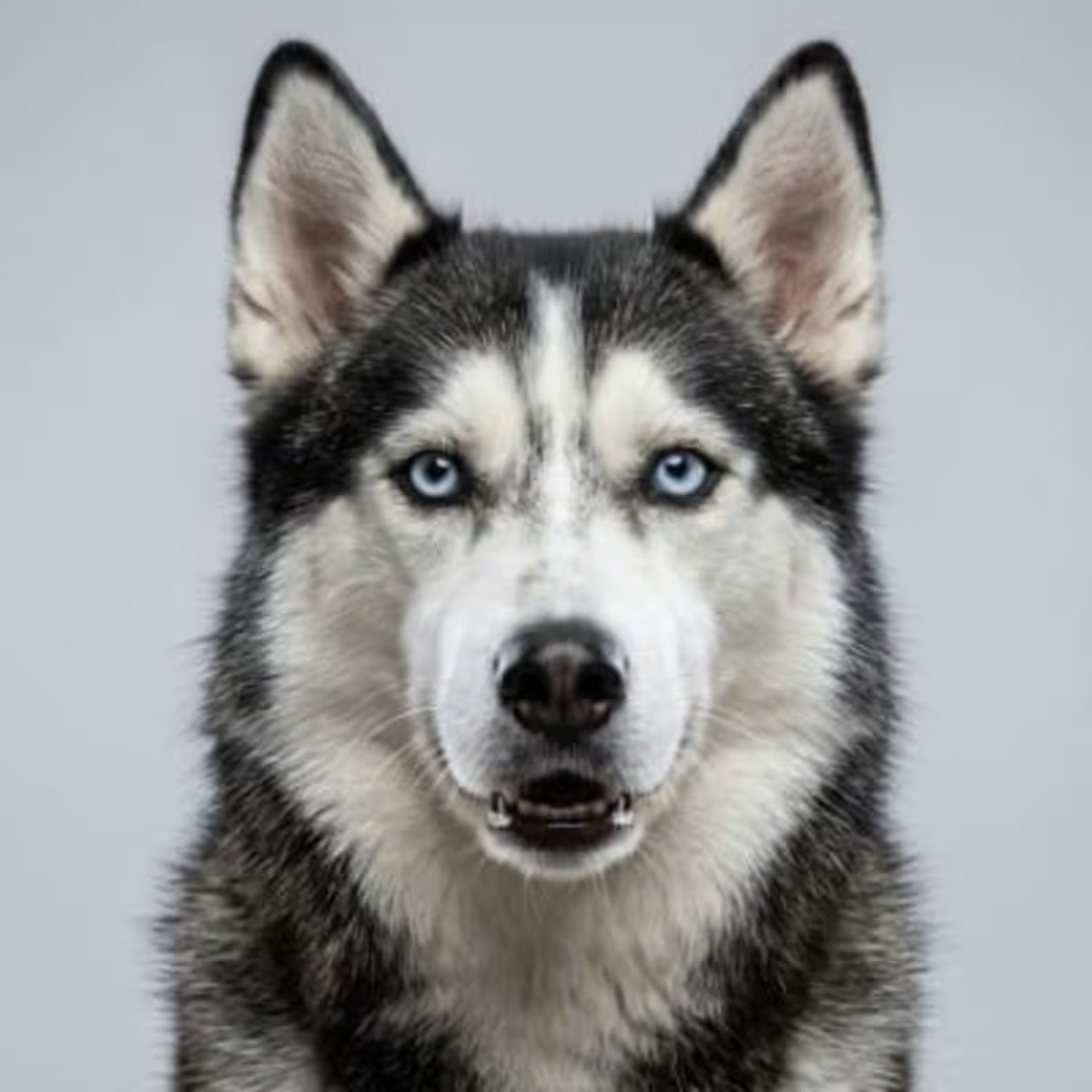
Siberian Husky
Medium · 35–60 lbs
Developed over thousands of years by the Chukchi people of northeastern Siberia as an endurance sled dog, the Siberian Husky gained worldwide fame in 1925 when a Husky named Balto led the final leg of the relay team that carried life-saving diphtheria serum 674 miles across frozen Alaska to the isolated town of Nome — the "Great Race of Mercy." A statue of Balto stands in Central Park, New York City.
The Siberian Husky sheds at a 95/100 rate, needs 90 minutes of daily exercise, and will test your patience with a stubbornness score of 80/100. This breed is stunning and demanding — perfect for very active owners in cooler climates who don't mind fur everywhere and a dog that will escape any enclosure it can find.
Traits
Care

Browse Siberian Husky by Location
Popular on Dog Engine



Other Dogs You Might Like

Siberian Husky Buyer's Guide
Common questions answered before you buy
It depends. The Siberian Husky can be trained (50/100 trainability), but their stubborn nature (80/100) means they test boundaries regularly and require an owner who can set and enforce rules consistently. Experienced owners or first-timers willing to invest in professional training from puppyhood will do fine.
A lot. The Siberian Husky needs at least 90 minutes of vigorous exercise every day — not a 20-minute walk. With an energy level of 95/100, they were built to work, run, or perform demanding tasks. Without proper physical and mental stimulation, they become destructive, anxious, or develop behavioural problems. This is a working dog in a family pet's body.
Yes — heavily. The Siberian Husky is a year-round heavy shedder. Expect dog hair on furniture, clothing, and floors constantly. Daily brushing and a good vacuum are non-negotiable. Grooming effort for this breed is moderate. The Siberian Husky needs brushing several times a week and occasional professional grooming every few months.
Yes — the Siberian Husky is one of the more family-friendly breeds with a friendliness score of 80/100. They do reasonably well with children when raised with them. As with any dog, teach children how to interact respectfully, and supervise early introductions.
The most frequently reported health concerns in the Siberian Husky include Hip dysplasia, Eye conditions and Hypothyroidism. Before buying, ask breeders for health clearances on the parents — reputable breeders will have OFA (hips/elbows) or equivalent certifications on file. Budget for annual vet visits and consider pet health insurance from puppyhood.
Not ideally. The Siberian Husky is a high-energy breed (95/100) that needs at least 90 minutes of vigorous exercise every day and room to move. Without outdoor space to release energy, they become restless, destructive, or develop anxiety. A house with a yard — or a very committed owner who can provide multiple outdoor sessions daily — is a much better fit.
Not reliably. The Siberian Husky has a strong prey drive (75/100), meaning a squirrel, cat, or interesting smell can override even solid recall training in an instant. Off-leash time is best reserved for fully enclosed areas. This is not a trainability failure — it's a hardwired instinct that even experienced trainers respect.